Every groomer knows the appointment: a dog with a coat that looks merely fluffy in the lobby and turns out, under the groomer's hands, to be matted solidly beneath the surface, behind the ears, under the collar, through the belly and legs. The owner is embarrassed, the groomer is sympathetic, and the dog is about to get much shorter hair than anyone planned. Understanding how that happens, and what happens next, takes the sting out of it.
Matting is not a character flaw in the owner or the dog. It is physics acting on certain coat types, helped along by water, friction, and a few skipped weeks. This guide explains the process, the groomer's actual options, and the prevention plan that keeps it from repeating in Statesville.
How a mat forms
Loose hair that should shed or be brushed out instead wraps around standing hair. Friction, from collars, harnesses, armpits, and a dog's own scratching, twists the wrap tighter. Water finishes the job: a matted coat that gets wet, in a bath, a lake, or a week of Carolina rain, dries with the mats cinched down like felt. Underneath, the skin cannot breathe or dry properly, and moisture, heat, and bacteria find a protected place to work.
The cruel detail is that mats often hide. The top layer of a coat can look brushed and presentable while felt forms at the skin below, which is why groomers comb down to the skin rather than trusting the surface, and why the steel comb test matters in home brushing. If the comb cannot pass from skin to tip, the coat is matted, whatever the mirror says.
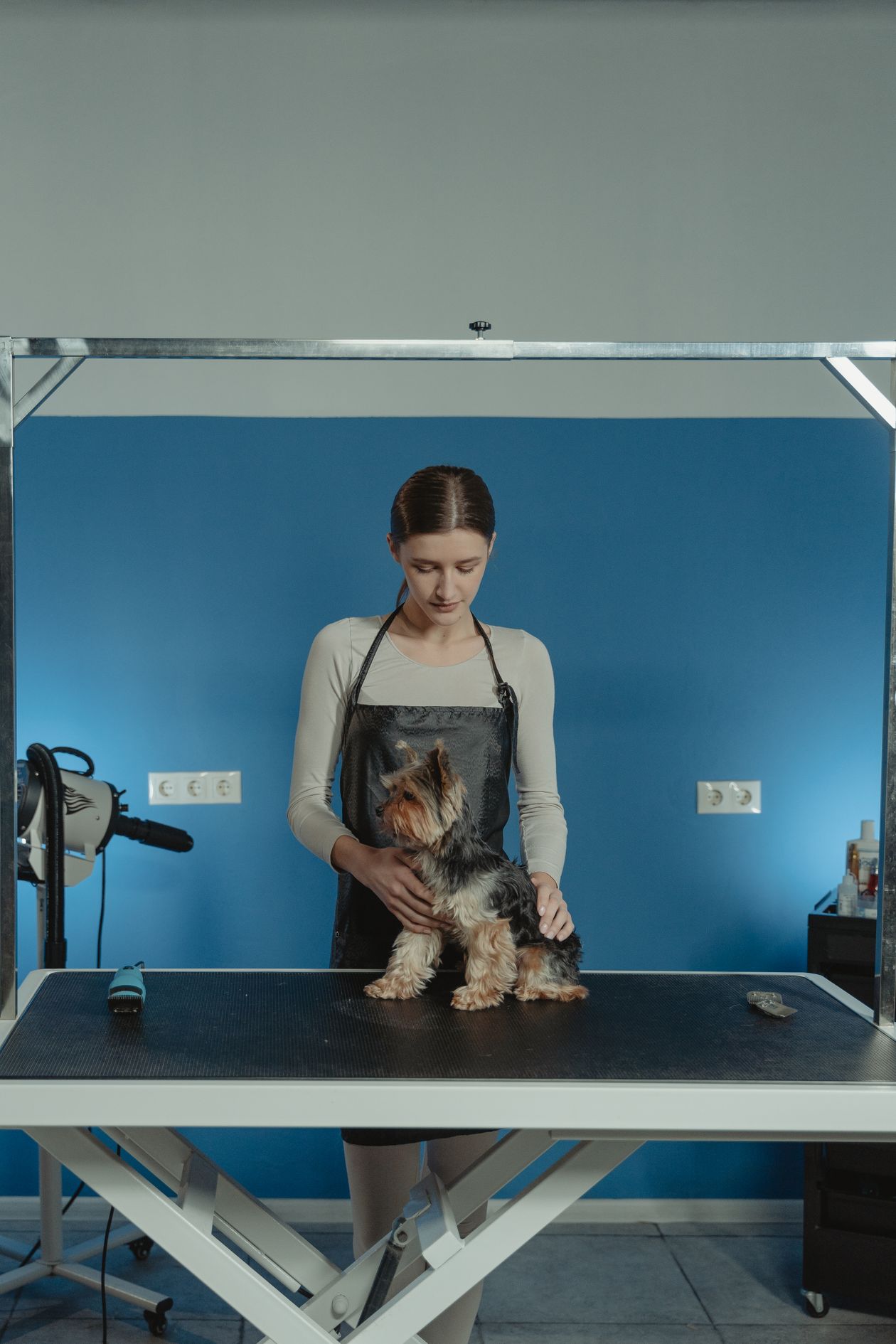
What the groomer will do, in order
- Assess the coat by hand and comb, down to the skin. The groomer maps where the matting is and how tight it sits before promising anything.
- Try the small stuff by hand. Loose, small mats can sometimes be split, worked with fingers and a comb, and saved, if the dog tolerates it comfortably.
- Explain the honest line. Brushing out severe mats hurts, pulls skin, and can take hours of distress. Professionals will tell you plainly when dematting stops being fair to the dog.
- Clip under the mats. A blade passes between skin and mat, releasing the felted coat in pieces. This is painless and fast, and it is why the dog comes home short.
- Check the skin underneath. Skin under old mats can be irritated, bruised, or infected. The groomer will show you anything concerning and may recommend a vet visit.
- Agree a prevention plan. A realistic brushing routine and a shorter grooming interval, set while the lesson is fresh.
Being clipped short after matting is sometimes called a shave-down, and it deserves a kinder name: it is a reset. The coat grows back, the skin recovers, and the dog is comfortable immediately, which is the outcome that actually matters to the dog.
Preventing the sequel
Prevention is a rhythm, not a project. Brush the friction zones several times a week if your dog has a curly or long coat, keep the professional grooming interval the groomer recommends rather than the one the calendar allows, and never bathe a tangled dog at home in hopes the bath will help. It will make the mats worse, guaranteed. At a shop like Canine Country, maintenance baths between full groomings exist for exactly this gap, keeping coats clean and brushed through without the full haircut every time.
Finally, forgive the episode properly, by changing the system rather than feeling bad about it. Set phone reminders, keep the comb where the dog gets brushed, and book the next appointment before leaving the current one. The dogs do not remember the short haircut. They remember being comfortable, and a mat-free dog is a comfortable one.
Common questions
Why can't the groomer just brush the mats out?
Small mats, sometimes. Severe mats pull live hair and skin for a long time and cause real pain and stress. Clipping under them is painless, and groomers choose the dog's welfare over the coat's length.
Will the coat grow back normally after being clipped short?
In most cases, yes, over the following weeks and months. Double coats can regrow unevenly for a while, which is one reason groomers avoid clipping them unless matting leaves no choice.
My dog got wet and matted almost overnight. How?
Water tightens existing tangles dramatically as they dry, like felt. A coat carrying small, unnoticed tangles can mat severely after one swim or rainy week, which is why brushing before baths matters.
Photos in this guide are representative stock images.
← All guides from Canine Country← Back to Canine Country