Groomers can tell, within seconds of a dog arriving, whether anyone has brushed it since the last visit. It is not a judgment. It is a coat report. Home brushing is the single habit that decides whether a dog's grooming appointments stay routine: coats that get brushed keep their length and their options, and coats that do not, mat quietly under a deceptively normal-looking surface.
This guide gives Statesville owners the routine: the right tools for the coat in front of you, the trouble spots in order, and the seasonal realities of Piedmont living, pollen in spring, red clay mud after every thunderstorm, and the twice-yearly shed that fills a vacuum in a day.
The home brushing checklist
- Brush before baths, never after a mat has been soaked. Water tightens mats. Dry, brushed-out coats wash clean.
- Work in sections, brushing down to the skin in layers rather than skimming the surface. A metal comb afterward is the honesty test: if it glides through, the section is done.
- Hit the friction zones every time: behind the ears, the armpits, the collar line, the belly, the backs of the legs, and the tail. Mats start where rubbing happens.
- For double coats in shedding season, brush outdoors if you can, working loose undercoat out in the direction it sheds. The birds in your Statesville yard will take some of it for nests.
- Keep sessions short and end on a good note, especially with puppies. Five cooperative minutes beat twenty minutes of wrestling.
- Check skin as you go: lumps, ticks after time outdoors, hot spots, and dry patches are all easier to handle found early.
Tools follow coat type. A slicker brush and a steel comb cover most long and curly coats. An undercoat rake or deshedding tool suits double coats, used with a light hand so it removes loose hair without cutting the coat. Short coats need little more than a rubber curry brush, which doubles as a bath tool. Buying the right two tools matters more than buying five wrong ones.
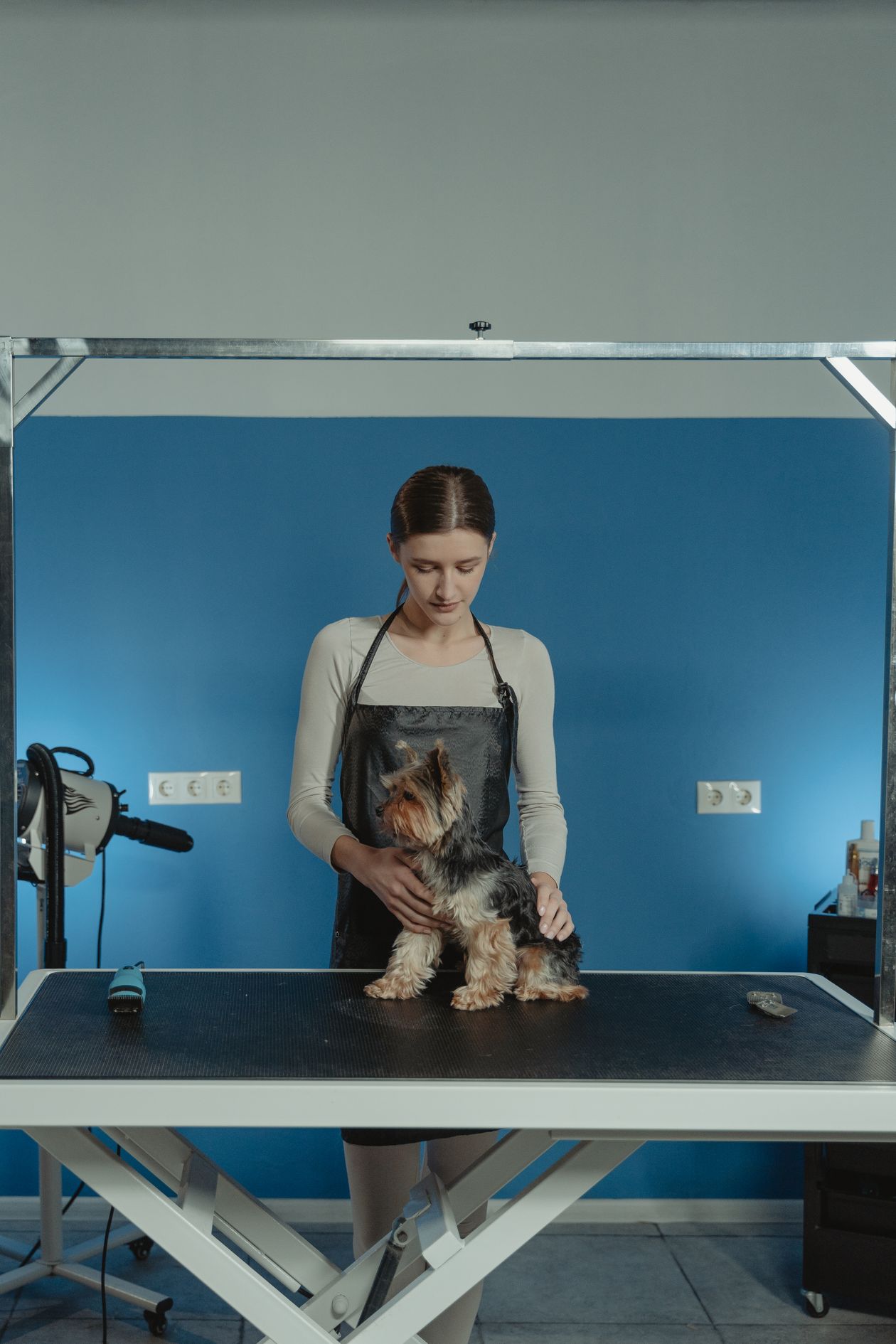
Mud, pollen, and the Piedmont seasons
Red clay is the region's signature grooming problem. It stains light coats, cakes between toes, and dries into a fine red dust that migrates to every carpet in the house. After wet weather, a rinse of the legs and belly and a towel at the door handles most of it. Check between the toes, where clay and small stones pack in, especially on dogs that walk trails around Statesville.
Pollen season coats everything, including the dog, in yellow dust each spring. A quick brush-out or wipe-down after long outdoor time reduces what comes inside and what the dog licks off itself. Summer adds its own item: burrs and seeds in long coats after field or woods walks. They are easiest to remove the day they arrive and become mat starters within a week if ignored.
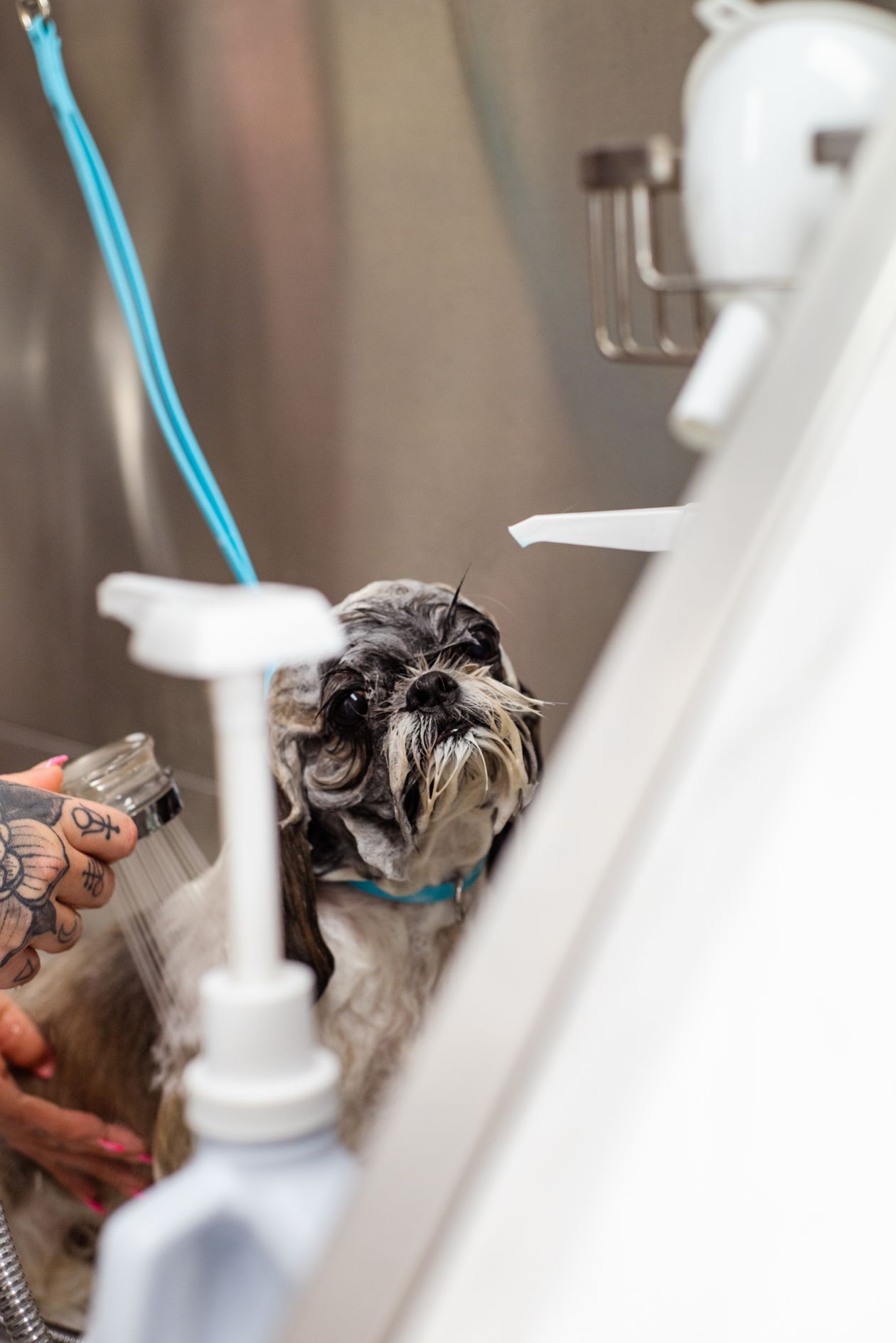
When home care hands off to the groomer
Home brushing maintains. It does not replace the full grooming appointment, where a dog gets a proper bath with coat-appropriate products, a full dry and brush-out, a cut when needed, and nails, ears, and sanitary areas handled together, the combination a shop like Canine Country builds into a full-service grooming session. Think of home care as keeping the appointment easy rather than avoiding it.
Know the handoff signals: a mat you cannot tease apart with fingers and a comb in a few patient minutes, a smell that survives a bath, nails clicking on the floor, or a dog that has started dreading your brush because sessions have become battles. Those are not failures. They are the schedule working as intended, your cue that the professionals' turn has come around.
Start where the dog lets you
If your dog currently hates brushing, do not begin with the full routine. Begin with thirty seconds where the dog tolerates it, a reward, and stop. Build over days. The coat will wait a week while trust is built, and it will not wait at all once the dog has learned to flee at the sight of the brush.
Common questions
How often should I brush my dog at home?
Curly and long coats need several short sessions a week. Double coats need weekly brushing, more during spring and fall sheds. Short coats manage with a weekly once-over.
Can I brush out a tight mat myself?
Small, loose tangles, yes, with fingers, a comb, and patience. A mat tight against the skin, no: pulling it hurts and can tear skin. That is a groomer's clip-out job, and it is painless when they do it.
Should I bathe my dog between grooming visits?
If needed, yes, ideally after brushing out tangles first, with a dog-appropriate shampoo, and a full dry afterward. Maintenance baths at the groomer between full sessions are another good option for heavy coats.
Photos in this guide are representative stock images.
← All guides from Canine Country← Back to Canine Country